


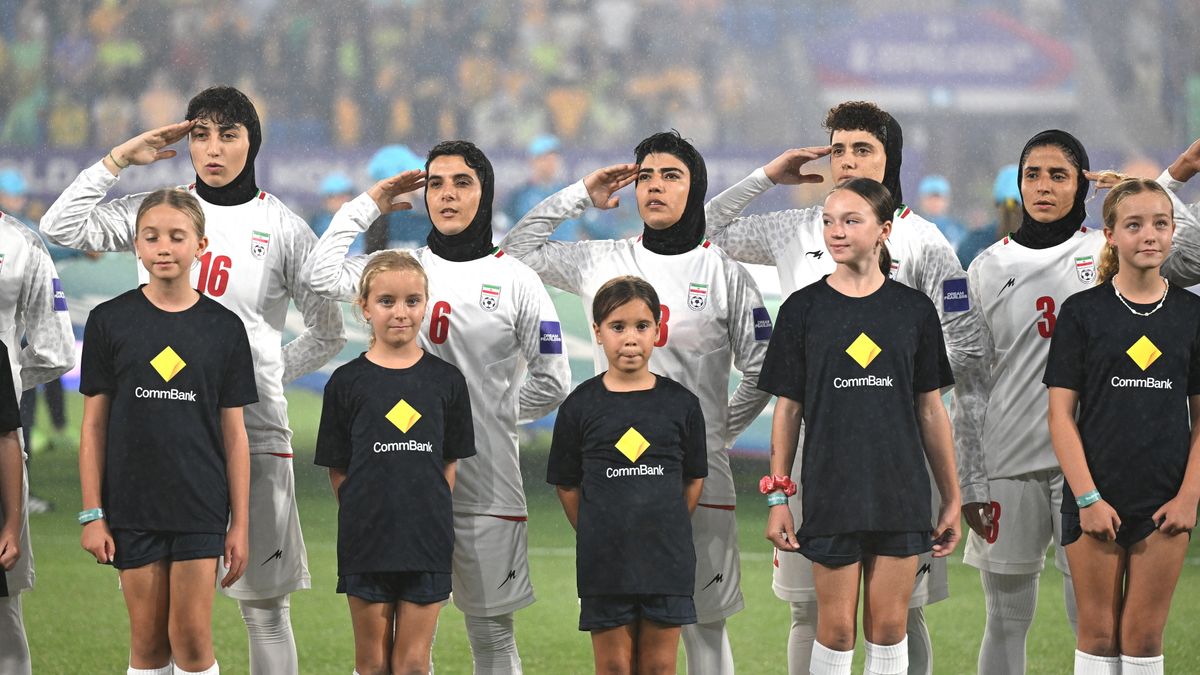
The Iranian women’s national football team found itself at the heart of an international political and social debate during the AFC Asian Cup in Australia. Their actions regarding the national anthem, performed thousands of kilometers from their homeland, highlighted the immense pressure faced by Iranian athletes caught between state expectations and global scrutiny. Initially, in their opening match against South Korea, the team maintained a silent vigil, refusing to sing or gesture during the anthem. This deliberate silence echoed the silent protest of the Iranian men’s team at the 2022 World Cup in Qatar, which garnered significant attention for its solidarity with protestors following the tragic death of Jina Mahsa Amini.
Just three days later, in their second group stage match against Australia, the scene dramatically shifted. The players, after visible hesitation and a glance from striker Shabnam Behesht, collectively saluted and sang the anthem. While some merely moved their lips, the unified act of participation marked a stark contrast to their previous silence. This change, observed by cameras in the coaching zone as well, initially met with confusion and whistles from the Gold Coast stadium crowd, but eventually gave way to applause – perhaps a recognition of the athletes’ complex predicament. The timing of these events, occurring after the reported death of Revolutionary Leader Ali Khamenei amidst US-Israeli airstrikes, added another layer of geopolitical tension to their already precarious situation.
For months, Iranian athletes, particularly women, have become powerful symbols in the ongoing struggle between athletic representation and political suppression. The regime in Tehran demands unwavering loyalty and expects these sportswomen to project an image of national unity and strength. Conversely, the international community often views them as faces of resistance, embodying the broader societal discontent within Iran. The narrow path between conforming to state mandates and making a stand for personal or national conscience has become increasingly perilous for these individuals, with every public gesture scrutinized for its underlying political message.
Despite their defiant stance on the anthem, the team’s performance on the field was unfortunately overshadowed. Following a 0:3 defeat against South Korea and a 0:4 loss to Australia, the Iranian women’s national team has been mathematically eliminated from contention for the Asian Cup quarterfinals, even before their final group stage match against the Philippines. This outcome underscores the immense burden placed on the players, where their actions off the pitch often carry far greater weight and consequence than their athletic achievements, turning a football tournament into a global stage for a powerful, silent, and then vocal, political statement.
